
 +90 312 815 15 00
 optima@optima.tc


 Road Blockers
 Bollards
 Gate Operators
 Security Doors
 Sliding Gate
 Folding Gates
 Swing Gate
 Cantilevered Gates
 Arm Barriers
 Fence Systems
 Tyre Killers
 Armored Guard Houses
 Turnstiles
 Licence Plate Recognition System
 Parking Barriers
 Vehicle Recognition Systems
 Scada Application
 Parking Payment Systems
 Parking Systems
 Traffic Solutions
 About Optima
 Corporate Philosophy
 Our Mission and Our Vision
 CEO's Message
 Optima Milestones
 Why Optima?
 R&D and Innovation
 Awards and Achievements
 Exported Countries
 Human Resources

 Catalog
What Is a Turnstile? Types, Working Principle and Applications
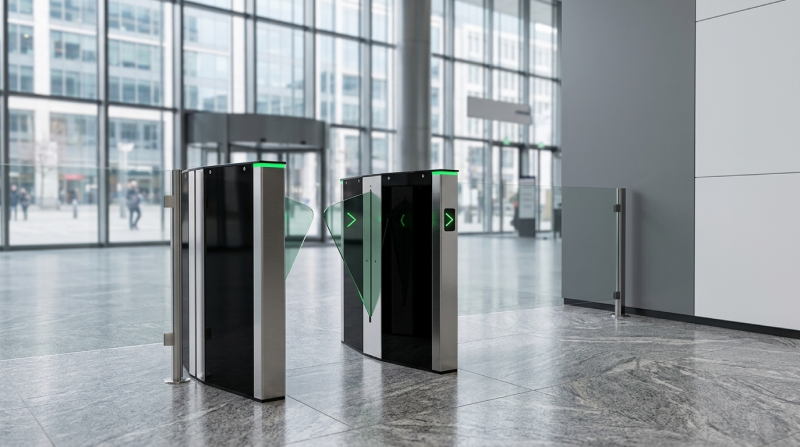
A turnstile is an access control system that lets pedestrians through one at a time in a controlled way, limiting unauthorized entry. It is designed to allow a person to pass when they present a valid credential (card, ticket, QR code or biometric verification) and to stop unauthorized users. From metro stations and office buildings to stadiums and factories, turnstiles are used to organize the flow of people and provide secure access management.
In this guide we explain how a turnstile works, its types, the right selection criteria by security level, how it integrates with access control technologies, and the engineering factors that drive its cost.
How Does a Turnstile Work? (Working Principle)
A turnstile consists of a moving barrier (arm, flap or door), a drive mechanism that controls it, and an electronic control board. The basic operating cycle has three steps:
- Authorization: The person verifies their identity via an RFID/contactless card, a QR or barcode ticket, a biometric reader such as face or fingerprint, or a remote command from a security officer.
- Release: If the credential is valid, the control board releases the mechanism; the arm rotates, the flap opens, or the door allows passage.
- Lock: After the person passes, the barrier returns to its home position and stays locked until the next authorized passage. Sensors (photocells / contactless position sensors) ensure only one person passes per cycle and prevent tailgating.
At high-traffic points, turnstiles can be connected to central software that manages the direction of passage (entry/exit/bidirectional) and throughput.
Types of Turnstile
Classifying turnstiles along two axes is the key to choosing the right product: height (security level) and mechanism type.
By Height (Security Level)
- Waist-height (tripod / half-height) turnstile: The most common type, with a three-arm rotating mechanism at waist level. It organizes flow at office, school, hospital and event entrances. Economical and compact, but offers medium security since it can be climbed over.
- Full-height (cage-type) turnstile: A high-security solution running from floor to ceiling that cannot be climbed over or crawled under. Ideal for unmanned entrances requiring high security — data centers, power plants, critical facilities, stadium perimeters.
- Speed gate (flap / sliding glass): An aesthetic, high-throughput solution with sliding or swinging glass wings. Designed for prestigious office lobbies and corporate buildings; its sensors detect tailgating.
By Mechanism Type
- Tripod turnstile: The classic rotating-arm structure; the most common method of entry/exit control.
- Flap / swing speed gate: Opening and closing wings, ideal for high pedestrian throughput.
- Sliding speed gate: Wings that slide sideways, offering a wide, unobstructed passage.
- Drop-arm turnstile: The arm drops automatically in an emergency, suitable for points needing fast evacuation.
- Automatic revolving door: A full-height revolving solution combining high security with comfort.
- Manual swing turnstile: A simple solution for low-traffic points with no electrical infrastructure.
- Wall/rail mount options: Turnstiles that can be wall-mounted for narrow spaces or special architecture.
The essence of the right choice is balancing security level against passage comfort: a full-height cage turnstile is needlessly harsh for a prestige lobby, while a waist-height turnstile is inadequate for a critical facility perimeter.
Integration with Access Control Systems
The power of a modern turnstile comes from the identity technologies it can integrate with:
- Contactless card and RFID: Staff and visitor cards — the most common method.
- QR / barcode ticket: Used in events, transport and visitor management.
- Biometric readers: Card-free, secure passage via face or fingerprint.
- Mobile and NFC: Phone-based passage.
- Combined with license plate recognition: At sites managing both vehicle and pedestrian access, turnstiles can be brought under the same access management as license plate recognition systems.
- Central software (time & attendance / access management): Staff attendance, visitor logging and reporting.
At vehicle entrances, turnstiles form an integrated pedestrian + vehicle access scenario together with arm barriers and parking barriers.
Turnstile Applications
- Government buildings, municipalities and corporate offices
- Airports, metro and train stations, transportation hubs
- Industrial facilities and logistics centers (staff access with time & attendance)
- Stadiums, event venues and entertainment complexes
- Universities, schools and campus entrances
- Hospitals, data centers and restricted service areas
- Fitness centers, swimming pools and membership entrances
What to Consider When Choosing a Turnstile
- Security level: Only flow organization, or physical barrier security? This determines the waist-height / full-height / speed-gate choice.
- Traffic volume and speed: The number of people per minute (peak-hour traffic) determines the mechanism type and wing/arm speed.
- Indoor / outdoor: Outdoors, a stainless steel body, a suitable IP protection rating and weather resistance are required.
- Accessibility: A wide accessibility lane should be planned for wheelchairs and luggage.
- Fire and emergency exit: An anti-panic (free evacuation) feature that automatically opens arms/wings in an emergency is critical.
- Integration: Compatibility with card, QR, biometrics, license plate recognition and central software.
- Aesthetics and material: 304/316 stainless steel, tempered glass wings and a design that fits the architecture.
- Service and spare parts: Local manufacturing, warranty and after-sales support directly affect total cost of ownership.
Factors That Determine the Price of a Turnstile
The price of a turnstile cannot be expressed as a single figure, because a manual waist-height turnstile and a glass-wing speed gate or a full-height cage turnstile are entirely different engineering products. The main factors are:
- Turnstile type (waist-height / full-height / speed gate / revolving door / manual)
- Mechanism and automation level (manual, semi-automatic, fully motorized)
- Body material and finish (304/316 stainless steel, tempered glass, custom color)
- Number of lanes and the need for an accessibility lane
- Integration and accessories (biometric reader, QR, LED guidance, counter, central software)
- Safety options such as anti-panic, fire scenario and UPS
- Installation and site conditions (floor preparation, cabling, indoor/outdoor)
The most reliable way to set the right budget is to have the site's traffic volume and security needs analyzed and to obtain a project-based quotation. You can request a quote from the Optima Engineering team.
Installation and Maintenance
Turnstiles are installed on a solid floor with correct cabling (power + data); in outdoor applications, floor fixing and waterproofing are important. Periodic maintenance should include mechanism lubrication, testing of photocells and position sensors, checking the card/reader and control board, and adjusting the wing/arm movement. A CNC-machined mechanism, a hydraulic damper and rust-prevention coating are the key factors that ensure long-lasting, quiet operation.
Optima Engineering Turnstile Solutions
Exporting to more than 40 countries since 2001, Optima Engineering manufactures turnstile systems developed in its own design center. It offers a wide product family — from waist-height (tripod) turnstiles to full-height cage turnstiles, from sliding and swinging speed gates to automatic revolving doors and manual swing solutions. A CNC-machined mechanism, contactless position sensing technology and rust-prevention coating ensure trouble-free operation for many years. You can review the turnstile solutions suited to your site and download the current product catalog.
Related Content
Frequently Asked Questions
What does a turnstile do?
A turnstile lets pedestrians pass one at a time in a controlled way, limiting unauthorized entry. It is used across a wide range — from staff time & attendance to event entry management and high-security facility perimeters.
What is the difference between a waist-height (tripod) turnstile and a full-height turnstile?
A waist-height turnstile is compact and economical and provides medium security. A full-height (cage) turnstile runs from floor to ceiling, cannot be climbed over, and is preferred for unmanned entrances requiring high security.
What is a speed gate?
A turnstile type with sliding or swinging glass wings that prioritizes high pedestrian throughput and aesthetics. It is ideal for prestigious lobbies and detects tailgating with its sensors.
Which access systems do turnstiles integrate with?
They can be designed to work with contactless card/RFID, QR or barcode tickets, biometric readers such as face and fingerprint, mobile/NFC, license plate recognition, and central access / time-and-attendance software.
Are turnstiles accessible for people with disabilities?
Yes. A wide accessibility lane can be planned for wheelchairs and luggage, and this lane connects to the same access control system.
What do turnstiles do in a fire or emergency?
Turnstiles with an anti-panic (free evacuation) feature automatically open their arms or wings in an emergency to allow fast, safe evacuation.
What determines the price of a turnstile?
The turnstile type, mechanism and automation level, body material, number of lanes, integration accessories, and installation and site conditions are the main factors.
Can turnstiles be used indoors and outdoors?
Yes. With a suitable stainless steel body, protection rating and weather-resistant components, turnstiles can be used both indoors and outdoors.
What is required to install a turnstile?
A solid floor and correct power and data cabling are required. Outdoors, floor fixing and waterproofing matter; site preparation before installation is critical for performance and service life.
After Sales Services
Your Assurance in Quality, We Are With You in Support
OPTIMA that has adopted it as its principle to keep customer satisfaction on the forefront by launching the products whose quality standards are at utmost levels on the markets is always there for you with its after-sale support services.


